Headsets vs. Walkies: Choosing the best option for set
Let's discuss the benefits of walkies and headsets, the disadvantages each bring to set, and the scenarios where I'd choose one over the other.


Walkie-Talkies have been a long established form of communication for film sets across the world for years. But with a rise in consumer priced, small, intercom headsets that allow for hands free communication, I've noticed more and more sets swapping from walkies to headsets, especially on smaller productions.
So in this article, let's discuss the benefits of walkies and headsets, the disadvantages each bring to set, and the scenarios where I'd choose one over the other.
This article is not sponsored. Brands that are discussed are just the ones that I've used and prefer. If you have different opinions or brands to try in the future, comment down below!
Walkie Talkies - Advantages and Disadvantages on a Film Set
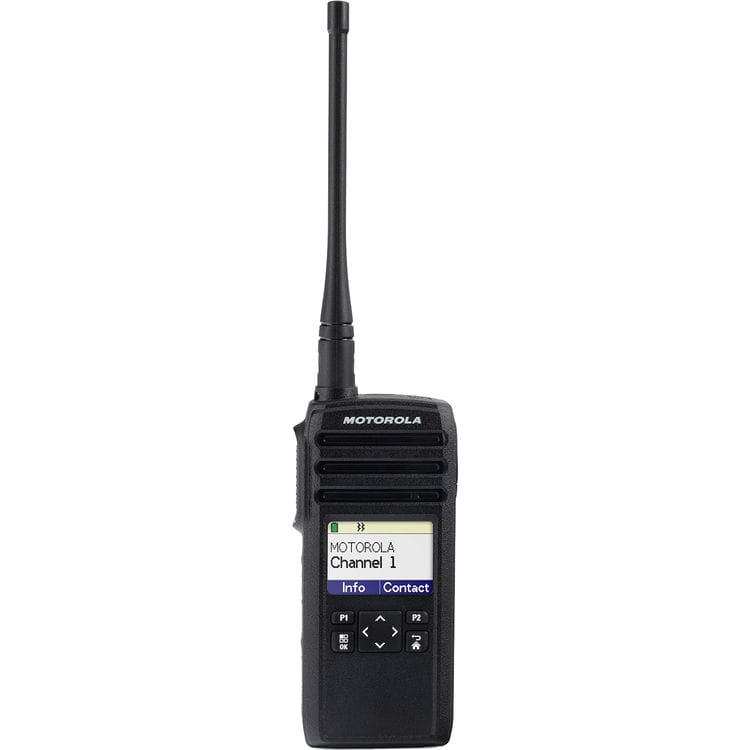
Motorala DTR700
The walkie that we like to use for our smaller sets
Walkie Talkies have long been the established form of communication on set, to the point that there is a protocol and language for using walkies on set. They are so engrained in film set culture that if you don't see "walkies" on a medium sized production, you become immediately skeptical of the schedule.
Walkies have a number of advantages, which is why they are ideal for film sets.
- Typically use RF bandwidths that allow for long range communication, which is ideal for sets that span 50 yards or more.
- Most walkies have separate channels, allowing for departments to communicate within themselves for faster communication.
- Instant communication, making conversations quicker than call or text, just at the press of a button.
Walkies are particularly helpful for the G&E, props, and locations department. My typical rule of thumb is that if a department has 3 or more people, or it would take me 20 seconds or more to find and talk to a person, then I should get walkies, at least for that department.
The disadvantages of walkies are few, but notable against headsets.
- Not hands-free, which limits crew members who have full hands (like cam operators)
- Not instantenous, meaning channels are limited to only one person speaking at a time.
For most film sets, these disadvantages aren't noticeable. But it was a couple of fast-pace, time-sensitive sets that caused me to reconsider walkies, and move towards the headset.
Headsets - Advantages and disadvantages
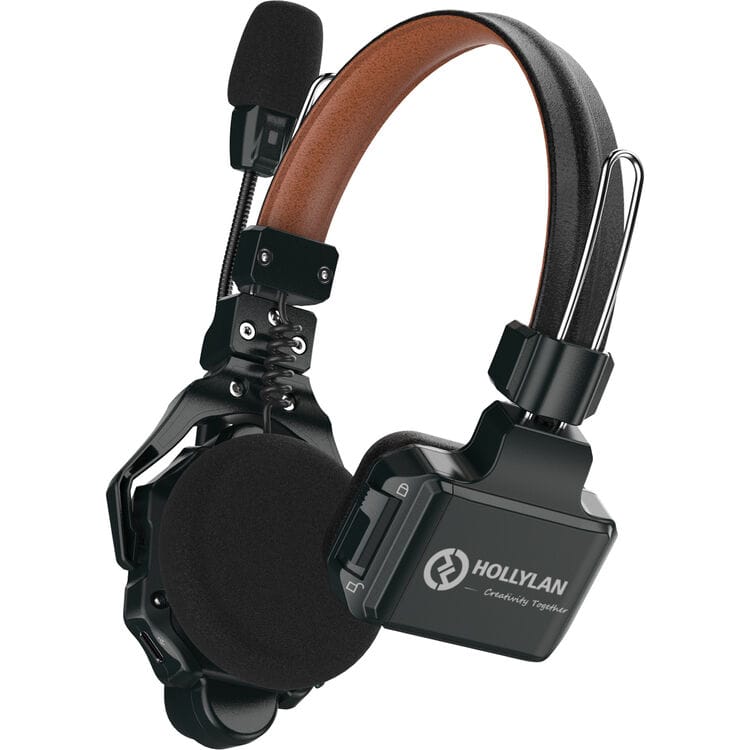
Hollyland Solidcom C1
This is the headset that I prefer for sets
Intercom headsets, such as the Hollyland Solidcom C1 Pro set, are a set of interlinked headsets that allow for instantenous communication across multiple, individual headsets, "hands-free." Headsets are typically a clearer/easier to hear, and allow for crew members to communicate hands free, albeit when the headset mic is down. Headsets are particularly good for when communication needs to be quick & tight, and are great for communication between cam operators & DP's or directors relaying live instructions.
Some of the advantages of headsets are
- Instantaneous, hands-free communication allows for quick discussions that are great for communication between cam operators and directors/DP's.
- Headsets are interlinked, meaning that all crew members hear instructions. This is great on smaller sets, but not great for larger sets or when private conversations need to be had.
I love headsets on shoots that are smaller and more controlled. I typically will break out headsets for crews that are 10 or less, or when I have shoots with a tight time-limit. We started using them on our athlete shoots, particularly because we had a producer running QB who would call out the shot and product we were moving to, with the whole crew running in tandem.
However, there are some noticeable disadvantages to headsets.
- Shorter range, with signal that is easily broken by walls
- Typically operate through a "master" headset. If you aren't near the master, you won't get the signal
- No/few private channels
- No restriction when speaking, which creates crosstalk
These are significant disadvantages, especially when you are on larger (distance wise) sets. Headsets don't typically have any sort of indication when people are out of range for the speaker, meaning that whoever is speaking could be relaying instructions to the empty air and have no idea that there wasn't a crew member on the receiving end. I've also noticed that cross talk can happen often, so that communication becomes an instance of whoever is loudest being heard. Typically, this is resolved in an all-hands set meeting at the top of the day explaining the protocol, but it is an issue that rises up from time to time.
When do I choose walkies or headsets?
Typically, I'm more prone to choosing headsets over walkies, because a lot of the sets that I run are with smaller, tighter crews. I like the ability to instantly communicate and more-so communicate hands free, especially when I'm operating a camera. But when my crew exceeds more than 10 people or spans more than 50 yards, I would make the switch to walkies. Walkies are the industry standard, and their range cannot be understated as the biggest advantage. For sets that have clear departments and a require more than a couple channels, walkies are the way to go. Regardless, some form of communication tech is needed on larger sets, because it saves time and effort.
Particularly, we bring headsets to sets where I am robot operating, just so that we have clear communication between my robot safety tech and myself, all hands free. We've brought headsets on our photography jobs, even though we were all close-by, because it was faster & cleaner than shouting across the room. We've also brought headsets for some tight, small-space studio shoots, just because it was a way of communicating without having the client hear us.
I think that walkies are still the clear communication method on most sets. But as sets get smaller, crews get streamlined, and shoots get tighter on time, there is a world where headsets become more common place.